Government & mission partners
Define a relevant installation need and a measurable development program for stationary steam-powered electricity.
Discuss a mission application
Aerospace hardware. A new power purpose.
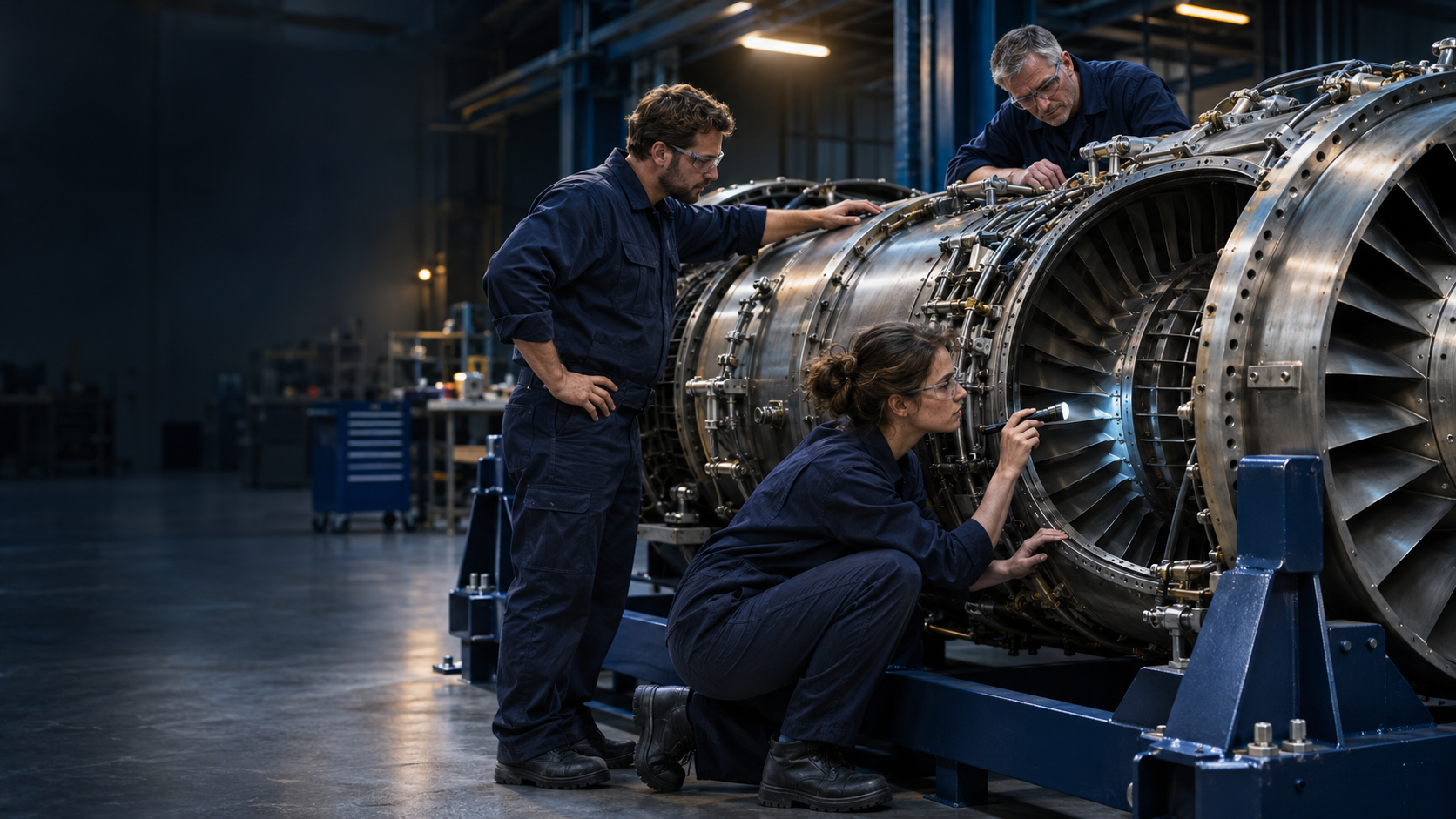
We’re developing a new role for retired jet-engine turbine hardware: stationary generators driven by steam. Precision engineering, with a different mission.
J57-based concept development
Stationary generation · External steam supply
AI-generated concept visualization
Proposed workshop and equipment
The flagship program
The J57 helped define an era of aviation. Our question is what qualified turbine hardware can do next.
Aero Vanguard Power is developing the systems needed to convert that hardware from a jet-fuel combustion application to steam-driven electrical generation on the ground.
Original rotating blades are central to the concept, subject to inspection and steam-duty assessment.
New steam admission, supports, controls and electrical interfaces create the proposed system.
The energy pathway
The concept brings an established energy principle to a different starting point: qualified aerospace turbine hardware.
Conceptual energy flow · not a released engineering schematic
A compatible external source supplies the heat needed to produce steam. The first design decision is the available thermal resource and the steam conditions it can support.
System boundary: the heat source remains part of the complete energy and cost balance.Steam carries energy supplied by an external heat source. Prototype testing will establish electrical output, efficiency and water-recovery performance for a defined operating duty.
Read the technology overview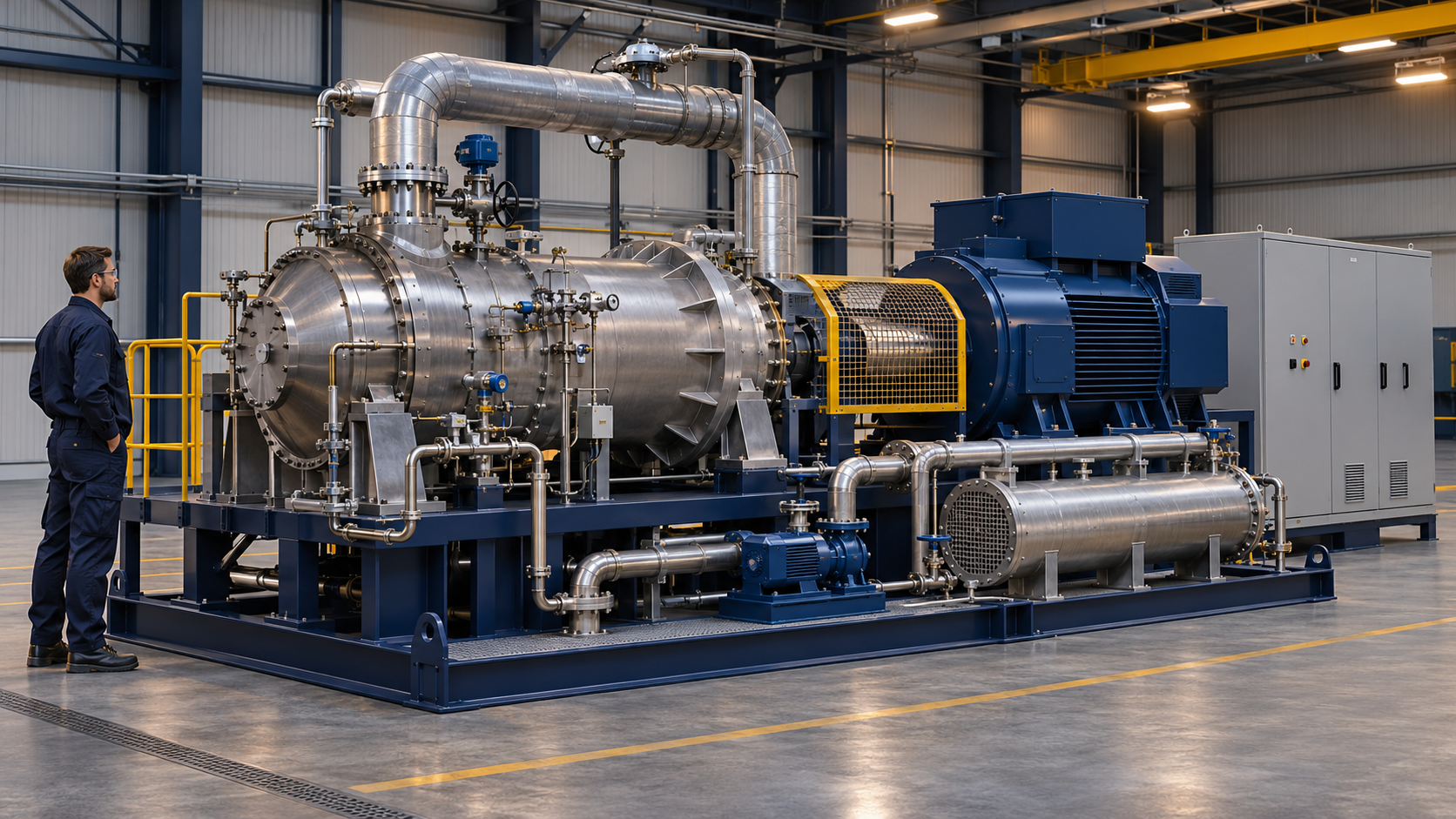
Designed around the complete system
A different working fluid changes the engineering. Our development approach addresses the entire conversion, from incoming steam to usable electrical output.
Steam passages and pressure boundaries matched to the qualified turbine hardware.
Power takeoffs and coordinated controls for the independent rotor systems.
Exhaust handling, condensation and water-quality monitoring within a defined cycle.
Potential applications
The right application begins with a compatible thermal resource. We’re exploring where a qualified steam-driven package could create practical value.
The first opportunity starts with a useful thermal resource. We are evaluating sites where an existing steam system or separately engineered heat-recovery process can support a defined electrical-generation duty.
The planned conversion process
A manufacturing approach built around qualified hardware, controlled engineering and measured acceptance.
This is the proposed production workflow. Product qualification and facility development precede commercial operations.
Identify each donor, record its available history and establish a controlled path through the facility. Configuration and traceability begin before disassembly.
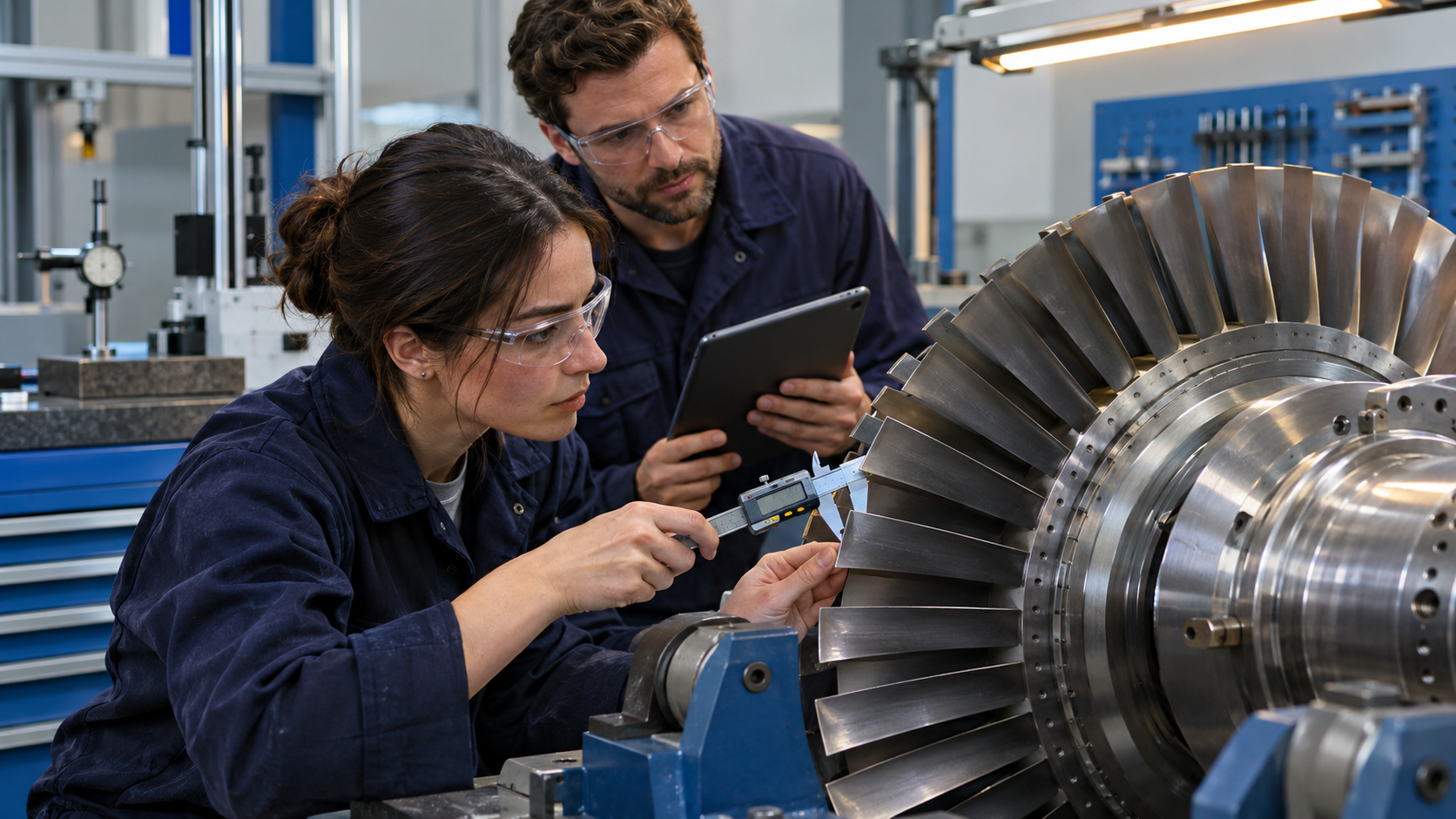
Disassemble, measure and assess the turbine hardware. Inspection, material assessment and remaining-life review determine which original components can advance.
Turn measured geometry and an approved steam duty into engineered admission, pressure boundaries, supports and controlled conversion hardware.
Bring the qualified turbine, power takeoffs, generators, controls and protective systems into one traceable assembly, with controlled loads on both shafts.
Measure electrical output and system inputs, verify protective functions and inspect the assembly against approved acceptance criteria.
Prepare accepted equipment for shipment with its configuration records, operating documentation and owner handover.
About Aero Vanguard Power
AVP’s ambition is to bring aerospace engineering into a new industrial role. We’re building the development and manufacturing plan around a focused question: can qualified retired turbine hardware become a competitive stationary steam-powered generation package?
The next step is an instrumented prototype that puts the engineering, performance and economics to the test.
Current stage
Establish the architecture, donor requirements and prototype scope.
Next milestone
Measure performance and evaluate the retained hardware under a defined steam duty.
Following successful validation
Evaluate repeat builds, serviceability and host-site integration.
Conditional scale-up
Advance production capability when qualification and demand support the investment.
Build with us
We welcome the people and organizations who can help turn a focused engineering concept into measured results.
Define a relevant installation need and a measurable development program for stationary steam-powered electricity.
Discuss a mission applicationCollaborate on turbomachinery, materials, generators, steam systems, qualification or a suitable demonstration site.
Start a technical conversationExplore a staged development and manufacturing opportunity, with investment decisions tied to technical and commercial evidence.
Request an investor briefingA closer look
A stationary steam-driven generator concept built around retired J57 aerospace turbine hardware. We’re developing the conversion hardware, shaft loading, controls and manufacturing approach needed to give qualified components a new power-generation role.
The original turbojet uses combustion gases to drive its turbines. Our proposed stationary conversion would use externally supplied steam, with engineered admission, pressure boundaries and electrical power takeoffs. The J57 is a gas turbine, rather than a piston engine.
Retaining the original rotating blades is a central design requirement. Each donor must pass condition, material and remaining-life assessments for the proposed steam duty. Accepted hardware would be combined with newly engineered admission, support, sealing and power-extraction systems.
An external heat source supplies the energy. A compatible existing steam plant or a separately engineered heat-recovery system could provide that source. Each installation must establish its steam supply, exhaust conditions and heat-rejection arrangement.
Our companion recovery concept would condense turbine exhaust, monitor water quality and return suitable condensate to the steam system. Recovery and total water use depend on the selected duty, cooling design and measured losses. A recovery rating has not yet been demonstrated.
The program is in concept development. The planned path moves from donor assessment and an instrumented laboratory prototype to field qualification and manufacturing readiness. We welcome technical collaborators, prospective host sites and development partners; a commercial delivery date has not been established.
Start a conversation
Tell us where your expertise, site or investment priorities meet the AVP development program.
info@aerovanguardpower.comTechnical collaboration · Government engagement · Host-site evaluation · Investment inquiries